
Amazon COSMO Algorithm Listing SEO: Complete Semantic Optimization Guide
For over a decade, Amazon search engine optimization lived and died by lexical matching. Sellers stuffed high-volume keywords into titles, packed backend search fields with raw search volume permutations, and relied on brute-force advertising spend to drive velocity and rank on Amazon A9 and A10 algorithms. That era is officially ending.
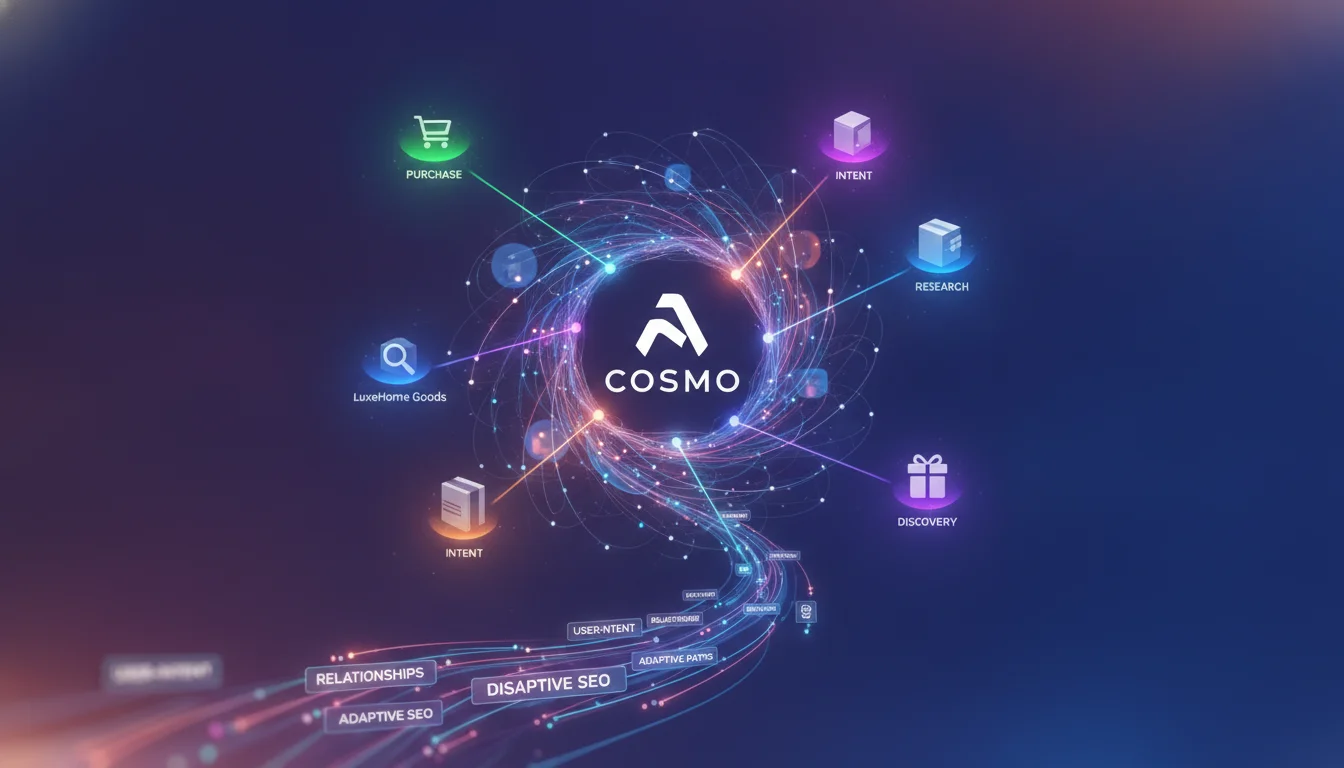
With the deployment of Amazon’s COSMO (Customer-Oriented Search Mental Model) framework, the marketplace has transitioned from a traditional lexical engine to a massive, commonsense-driven semantic knowledge graph. COSMO doesn’t just evaluate whether your product listing shares strings of text with a customer’s search query; it decodes why the shopper is searching, predicts their unstated physiological and situational needs, and builds graph edges between latent human intent and your product attributes.
In this comprehensive, research-backed tutorial, we leverage the principles of Semantic SEO to explain exactly how COSMO operates and provide an actionable, step-by-step roadmap to re-engineer your product detail pages for peak organic discoverability in the COSMO and Rufus era.
Understanding the Shift: From A9/A10 Lexical Matching to COSMO’s Knowledge Graph
To optimize for COSMO, you must first understand the structural mechanics of how it processes customer queries compared to legacy systems.
1. The Lexical Limitation of A9/A10
Historically, Amazon’s search infrastructure mapped queries directly to listing text tokens. If a buyer searched for “shoes for pregnant women,” the algorithm prioritized listings containing exact or broad matches of those lexical units: “shoes,” “pregnant,” and “women.” Products with high sales velocity on those exact tokens held the highest search rank, even if the shoes were fundamentally unsuited for swollen feet or difficult to slip on.
2. The COSMO Semantic Mental Model
Amazon’s published research reveals that COSMO acts as a commonsense knowledge generation and validation engine. Built on large language models (LLMs) and billions of user behavioral signals, COSMO constructs a graph connecting entities:
- Query Entity: “Shoes for pregnant women”
- Latent Intent / Condition: Swollen feet (edema), limited mobility, balance shifts, joint sensitivity.
- Commonsense Product Attributes Required: Slip-on design (no bending over to tie laces), wide toe box, non-slip traction soles, cushioned memory foam.
Under COSMO, a product titled “Hands-Free Slip-On Walking Loafers with Adaptive Cushioned Sole” can outrank an exact-match keyword listing for “Pregnant Women Shoes” because COSMO’s knowledge graph recognizes that the product attributes directly satisfy the customer’s physiological and situational needs.
| Dimension | Legacy A9/A10 Algorithm | COSMO Semantic Engine |
|---|---|---|
| Primary Driver | Keyword density & exact string frequency | Entity relationships & commonsense intent |
| Query Resolution | Syntactic token overlap | User intent graphs & latent problem-solution nodes |
| Indexing Target | Search queries and broad root terms | Attribute-Value pairs, use cases, and contexts |
| AI Integration | Rule-based collaborative filtering | LLM-driven real-time retrieval & Amazon Rufus |
Prerequisites: Preparing Your Brand for Semantic Optimization
Before modifying titles, bullets, or backend attributes, ensure you have gathered the following diagnostic assets:
- Brand Registry Access: Full access to Amazon Brand Analytics (ABA), Search Query Performance (SQP), and Customer Review Insights.
- Review & Q&A Mining Data: A scrape or compilation of at least 500 reviews and customer questions from your top 5 category competitors.
- Catalog Attribute Inventory: An exported Category Listing Report (Flat File) for your ASINs to inspect your existing structured attribute fields.
- Semantic Context Vectors: A mapped list of unexpressed intents: Who is the buyer? Where is it used? What friction does it eliminate? What complementary items are paired with it?
Step-by-Step Tutorial: How to Optimize Your Listing for the COSMO Algorithm
Step 1: Mine Latent User Intent and Entity Relations
Semantic SEO dictates that every product exists at the intersection of core entities, sub-entities, and contextual attributes. You must systematically identify the latent intents COSMO associates with your product category.
- Analyze the Search Query Performance (SQP) Report: Look for multi-token long-tail searches (4+ words). Identify terms with high impression shares but lower click-through rates. These indicate unaddressed intents where buyers see your listing but do not recognize the solution to their implicit need.
- Mine the “Customer Review Insights” Tab in Seller Central: Amazon’s native generative summaries categorize reviews into positive and negative attribute tags (e.g., “ease of setup,” “durability in extreme weather,” “fit on wide calves”). These tags represent hard-coded nodes in Amazon’s knowledge graph.
- Extract Commonsense Triples: Formulate relationships in the standard semantic format:
[Subject] -> [Relationship] -> [Object].- Example: [Insulated Water Bottle] -> [Used For] -> [Hot Yoga]
- Implicit Requirement: [Must not sweat/condense] + [Fits standard cup holder] + [One-handed sip operation]
Step 2: Restructure the Product Title for Entity Resolution
Stop writing titles purely for keyword scrapers. COSMO parses titles into distinct semantic tokens: Brand, Core Entity (Product Class), Primary Material/Feature, and Contextual Qualifier (Use Case/Intent Node).
Follow this high-impact COSMO title architecture:
[Brand Name] + [Core Product Entity] + [Primary Functional Value / Solving Mechanism] + [Contextual Scenario / Target Audience / Material Spec]
- Flawed A9 Title (Keyword Stuffed): “Dog Bed Washable Calming Dog Bed Large Dogs Pet Bed Orthopedic Anti Anxiety Dog Mattress Soft Fleece Grey.”
- COSMO Optimized Title: “ZenK9 Orthopedic Memory Foam Dog Bed with Waterproof Washable Cover – Joint Relief & Calming Bolster Support for Large Aging Dogs”
Why this works for COSMO: The optimized title maps the entity (Dog Bed) to clinical and situational nodes (Orthopedic Memory Foam, Joint Relief, Large Aging Dogs). It confirms to the algorithm exactly which latent shopper intents the product resolves without sacrificing readability.
Step 3: Engineer Bullet Points with Attribute-Value Verification
Amazon’s generative shopping assistant, Rufus, sits directly atop COSMO. When a customer asks Rufus a conversational question, the LLM parses the listing’s bullet points to extract facts. If your bullets are poetic marketing fluff, your product is disqualified from conversational recommendations.
Format each bullet using the Feature-Mechanism-Outcome (FMO) framework:
- Header (The Entity Node): Clearly identify the attribute in bracketed or capitalized text.
- Mechanism (The Technical Spec): Quantify the feature with precision (measurements, certifications, specific material grades).
- Outcome (The Intent Resolution): State explicitly the real-world problem solved or scenario enabled.
Example COSMO-Optimized Bullet Point:
[ALL-WEATHER CORROSION RESISTANCE] Engineered with 304 Marine-Grade Stainless Steel and double-passivated seals, preventing rust and chemical degradation in high-humidity coastal and chlorinated pool environments.
This bullet creates undeniable semantic edges connecting the product to specific environmental vectors (coastal, chlorine, marine-grade), directly answering queries like “outdoor towel hooks that won’t rust near saltwater.”
Step 4: Saturate Category Listing Flat Files (Backend Structured Attributes)
The single most neglected area of Amazon SEO is the structured attribute fields in the Category Listing Template. Many brands fill out only mandatory fields (Title, Price, SKU, Barcode) and ignore the 50+ optional drop-down menus.
COSMO relies on structured data to confirm commonsense graph assertions. If your listing text says “great for camping,” but the backend attribute [target_use] does not include “Camping & Hiking”, the algorithmic confidence score decreases.
- Download your category’s full inventory template from Catalog > Add Products via Upload > Download an Inventory File.
- Fill out every contextual field:
item_type_keyword,closure_type,special_features,care_instructions,target_gender,included_components, andfinish_type. - Ensure zero conflicting values between your flat file attributes and your frontend listing copy.
Step 5: Align Backend Search Terms (Generic Keywords)
Under COSMO, your 249 bytes of backend search terms should no longer duplicate keywords present in the title or bullets. Instead, use this space for latent semantic distance terms—words that are conceptually related but linguistically distinct.
- Include: Misspellings, alternate colloquial terms, adjacent use cases, regional terminology, and downstream consumer pain points.
- Exclude: Punctuation (commas, semicolons), competitor brand names (policy violation), and terms already validated in your title.
Step 6: Deploy A+ Content and Brand Story for Knowledge Graph Anchoring
Amazon indexing processes Brand Story modules and standard A+ content with computer vision and semantic text parsers. This section is your opportunity to build cross-product brand entity graphs.
- Comparison Charts: Use comparison tables not just for upsells, but to demonstrate distinct intent variations (e.g., Model A is for Beginner Hobbyists, Model B is for Commercial Heavy-Duty Use).
- Brand Story Cards: Clearly outline your brand’s mission, standard testing certifications, and material provenance. COSMO assesses brand authority across related categories to determine if your product can be surfaced in adjacent intent clusters.
Practical Case Example: Transforming a Stagnant Product
Let’s examine how a specialized home fitness product adapts to COSMO optimization.
Product: Resistance Band Door Anchor
- Old Strategy (A9):
- Title: Door Anchor for Resistance Bands Heavy Duty Door Attachment Workout Bands Anchor Strap.
- Focus: Keyword stuffing “door anchor.”
- Result: Lost rank to generic Chinese suppliers competing solely on price.
- COSMO Semantic Strategy:
- Extracted Intent Vectors: Apartment dwellers unable to drill holes in walls; hotel travelers needing portable gym setups; fear of damaging luxury doors; safety concerns over band slippage during heavy rows.
- New Title: “ProGrip Non-Marking Door Anchor for Resistance Bands – Solid Steel Core with Dense Foam Bumper for Zero-Drill Home Workouts and Travel Hotel Doors”
- Bullets: Directly targeted the “hotel workout” and “no paint damage” intents. Backend attributes specified
[installation_type: tension-mounted / no-drilling]. - Outcome: Rufus and COSMO began prioritizing the listing for long-tail, high-intent searches: “how to work out with bands in a hotel without damaging door,” generating a 34% increase in organic conversions within 45 days.
Troubleshooting COSMO Ranking and Visibility Issues
If your listing recently experienced a drop in organic sessions despite maintaining strong historical sales velocity, review these common semantic pitfalls:
Issue 1: High Bounce Rate on Inferred Intent (Semantic Mismatch)
Symptom: High impressions on a new keyword, but near-zero conversions, followed by a sharp drop in overall organic impressions.
Cause: COSMO tested your listing against a latent intent graph (e.g., assuming your portable blender can crush whole ice), but buyer reviews or Q&As contradict this capability.
Fix: Refine listing copy to explicitly set operational boundaries. Clearly indicate what the product is—and is not—designed to handle. Precision prevents COSMO from serving your ASIN to wrong-intent shoppers who harm your conversion score.
Issue 2: Rufus Hallucinating Missing Features
Symptom: Shoppers ask Rufus questions in your listing, and Rufus provides inaccurate answers or claims the product lacks a feature it actually possesses.
Cause: The feature is buried in complex graphic images or expressed using ambiguous marketing language that the parser cannot parse.
Fix: Create direct, literal statements in your listing text: This product includes [Feature X]. It is designed to [Solve Problem Y]. Place this in bullet point 1 or 2 and replicate it in your backend attributes.
The Future-Proof COSMO Listing Checklist
Review this checklist before publishing listing updates:
- [ ] Core category entity clearly established within the first 60 characters of the title.
- [ ] Every bullet point structured using the Feature-Mechanism-Outcome (FMO) format.
- [ ] Latent customer pain points explicitly addressed with tangible product attributes.
- [ ] Flat file attributes filled out completely, matching frontend copy without contradiction.
- [ ] Customer Q&A proactively seeded with factual answers covering edge-case use scenarios.
- [ ] A+ Content comparison tables populated with clear feature-differentiation tags.
- [ ] Backend search terms utilized exclusively for non-redundant, semantic distance concepts.
Amazon’s transition to the COSMO knowledge graph fundamentally rebalances the playing field. Brands that rely on unscientific keyword repetition will continually lose ground to listings that understand their customer’s true operational intent. By engineering listings as structured, authoritative nodes of commonsense data, you ensure your catalog remains discoverable, trusted, and dominant across Amazon’s emerging AI search ecosystem.


Add comment