
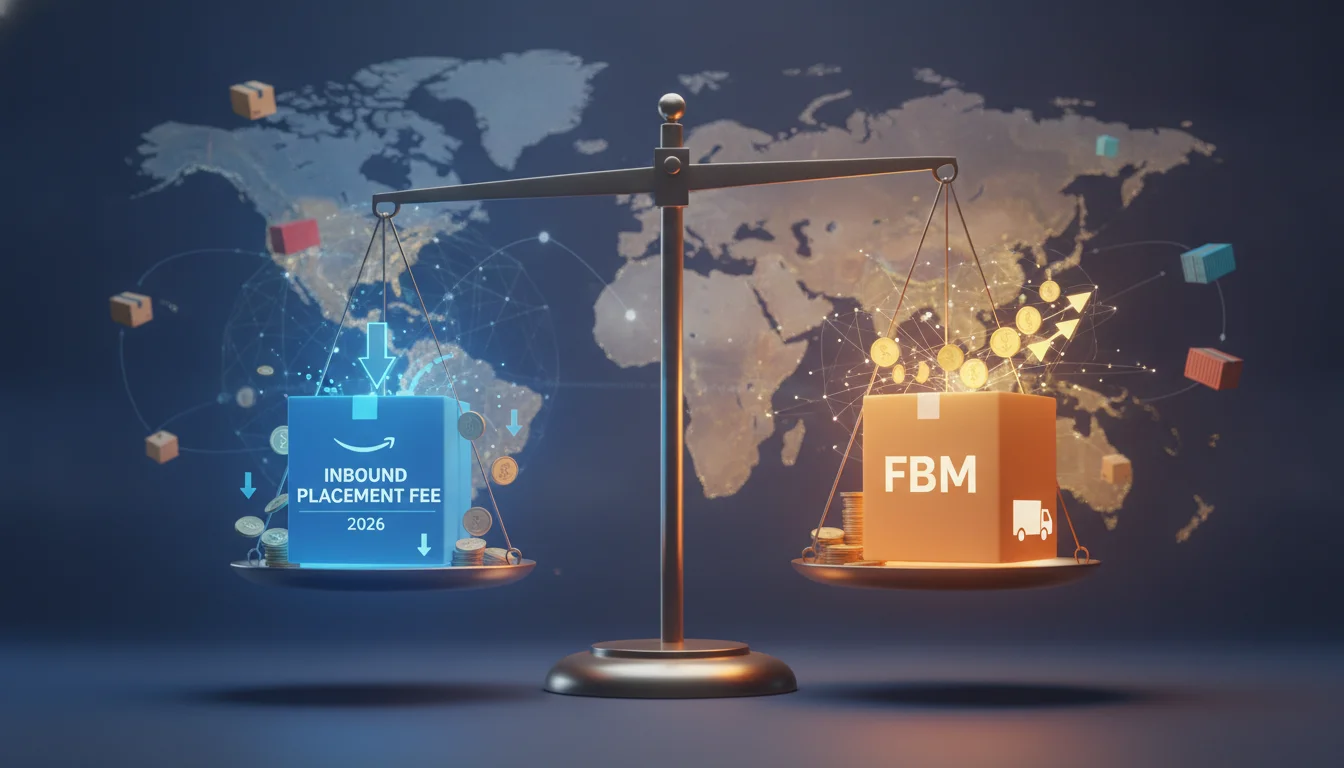
Amazon Inbound Placement Fee vs FBM in 2026: Margin Analysis & Migration Blueprint
Amazon’s logistics ecosystem has undergone a fundamental structural transformation. What began as an operational adjustment has solidified into permanent cost architecture: the Amazon Inbound Placement Service Fee. For sellers worldwide, the financial impact of splitting shipments across five or more regional Fulfillment Centers (FCs)—or paying a steep per-unit toll for single-destination consolidation—has compressed gross margins by 4% to 12% across catalog categories.
Consequently, brand owners, aggregators, and private label operators are aggressively recalculating their unit economics. The primary alternative under consideration is Fulfillment by Merchant (FBM), paired with either distributed 3PL networks or self-fulfilled warehouse infrastructure. But is migrating from FBA to FBM a universally profitable move in 2026, or does it risk catastrophic Buy Box suppression, declining organic rank, and operational failure?
This comprehensive guide delivers a definitive semantic breakdown of the Amazon Inbound Placement Fee vs. FBM in 2026. We evaluate the true cost drivers of Amazon’s multi-location receiving matrix, map out side-by-side unit economic models, and provide a battle-tested, step-by-step tutorial for migrating selected inventory to an FBM or hybrid fulfillment engine without sacrificing search velocity or conversion efficiency.
Understanding the 2026 Amazon Inbound Placement Fee Mechanics
To evaluate whether FBM provides a viable economic workaround, we must first dissect how the Inbound Placement Service Fee operates inside the modern Send to Amazon workflow. Amazon introduced this fee structure to decentralize inbound inventory distribution costs, effectively transferring the expense of internal national linehauls from Amazon’s balance sheet directly to the merchant.
When generating an inbound shipment in Seller Central, sellers are forced to select between three distinct inbound placement options, each carrying distinct freight and placement fee consequences:
- Amazon-Optimized Inbound (No Placement Fee): Amazon requires you to split your inventory shipment across four, five, or more designated FCs across the East, Central, and West fulfillment zones. While the per-unit Inbound Placement Service Fee is waived ($0.00), your primary Less-Than-Truckload (LTL) or Full-Truckload (FTL) freight costs escalate dramatically due to fragmented shipments, multiple pallet configurations, and higher administrative prep handling.
- Partial Shipment Split (Reduced Placement Fee): You route your shipment to two or three regional hubs. Amazon assesses a discounted placement fee per unit (averaging $0.12 to $0.38 per unit for standard-size items, scaling significantly higher for bulky inventory), but your domestic shipping remains somewhat fragmented.
- Minimal Shipment Splits (Single Destination / Premium Fee): You send your entire shipment to a single regional inbound consolidation center. In exchange for simplified domestic logistics, Amazon levies maximum placement fees, often ranging from $0.21 to over $1.58 per unit for standard-size goods, and reaching $2.16 to $6.00+ for large bulky tiers.
When combined with the Low-Inventory-Level Fee—which penalizes SKUs maintaining fewer than 28 historical days of supply relative to sales velocity—the hidden cost of FBA in 2026 is no longer just pick, pack, and weight-handling fees. It is a compound friction model that directly penalizes cash-constrained sellers unable to build massive multi-region inbound inventory pipelines.
The Economic Face-Off: FBA Inbound Placement vs. FBM Unit Economics
Does FBM actually yield higher net margins when you account for pick/pack labor, third-party logistics (3PL) storage, packaging materials, and commercial carrier rate cards? Let’s analyze the unit economics using a standard consumer packaged good (CPG) reference model.
Case Study: Standard-Size Product (1.2 lbs, 10″ x 7″ x 3″, ASP: $29.99)
Consider a typical consumer electronic or home accessory selling for $29.99 with a sales velocity of 1,000 units per month.
| Cost Component | FBA (Minimal Split – 1 FC) | FBA (Amazon-Optimized – 5 FCs) | FBM (Modern 3PL Network) |
|---|---|---|---|
| Amazon Referral Fee (15%) | $4.50 | $4.50 | $4.50 |
| FBA Pick & Pack / Base Fulfillment | $4.15 | $4.15 | $0.00 |
| Inbound Placement Fee (2026 Tier) | $0.34 | $0.00 | $0.00 |
| Inbound Freight to FC (LTL/SPD) | $0.25 | $0.78 | $0.22 (to single 3PL node) |
| FBM 3PL Pick, Pack & Materials | $0.00 | $0.00 | $2.65 |
| Direct Postage (USPS Ground Adv./UPS) | $0.00 | $0.00 | $4.85 |
| Storage Fee (Monthly normalized) | $0.18 | $0.18 | $0.14 |
| Total Fulfillment & Placement Cost | $9.42 | $9.61 | $12.36 |
| Net Margin Contribution | $20.57 (68.6%) | $20.38 (67.9%) | $17.63 (58.8%) |
The Insight: For standard-size, sub-2 lb items, FBA remains mathematically superior on a pure margin basis despite inbound placement fees. Amazon’s extreme carrier volume discounts keep last-mile fulfillment drastically cheaper than commercial 3PL carrier rates.
However, the economic reality flips completely once we evaluate Large Bulky, Oversize, or Low-Turnover items:
Case Study: Large Bulky Product (14 lbs, 22″ x 16″ x 8″, ASP: $89.99)
- FBA Base Fulfillment Fee: $11.85
- FBA Inbound Placement Fee (Minimal Split): $4.80
- Inbound Freight (Split to remote FCs): $3.20
- FBA Total Fulfillment Friction: $19.85
- FBM Specialized 3PL Carrier Rate (Zone-Skipped Ground): $13.50 + $3.10 Pick/Pack = $16.60
- Margin Advantage under FBM: +$3.25 per unit (+3.6% net margin improvement)
In 2026, FBM is not a blanket replacement for FBA; it is a surgical weapon for high-cube, bulky, slow-turning, or multi-pack inventory where placement fees and dimensional weight penalties decimate FBA profitability.
Prerequisites for Executing an FBM Migration
Transitioning SKUs from FBA to FBM—or launching a dual-fulfillment strategy—requires strict operational controls to safeguard your account health metrics. Before moving forward, verify that you have established the following foundations:
- Carrier Automation Platform: Integration with software that connects your warehouse or 3PL directly to Amazon Buy Shipping (e.g., Veeqo, ShipStation, or native ERP connectors). Using Amazon Buy Shipping is mandatory to protect against A-to-z claims and late delivery tracking defects.
- On-Time Delivery Rate (OTDR) Compliance: Amazon mandates an OTDR of at least 90% (and ideally 95%+) for merchant-fulfilled offers. Ensure your shipping facilities can meet a strict 1-day or same-day Handling Time with strict late cut-off times.
- Active Amazon Shipping Templates: Verified Shipping Setting Automation (SSA) configured inside Seller Central to calculate dynamic delivery promises based on carrier transit performance and customer zip codes.
- Dual SKU Architecture: Never overwrite your existing FBA SKU. You must generate dedicated, distinct FBM MSKUs connected to the same ASIN to maintain inventory elasticity.
Step-by-Step Tutorial: Implementing a High-Margin FBM Workflow
Follow this exact operational blueprint to transition selected inventory to Merchant Fulfillment while preserving listing rank and isolating yourself from placement fees.
Step 1: Perform a Catalog Placement Fee Audit
Log into Seller Central and navigate to Reports > Fulfillment > Payments > Fee Preview Report. Cross-reference this data with your monthly Transaction View to isolate the exact dollar amount paid in Inbound Placement Service Fees over the last 90 days.
Filter for SKUs where:
- Inbound Placement Fee + Base FBA Fee exceeds 38% of your gross selling price.
- Inventory turn rate exceeds 45 days (placing you at risk for Low-Inventory-Level Fees as well).
- Product dimensional weight categorizes the item into Large Bulky, Extra-Large, or Special Oversize tiers.
Step 2: Build Automated Shipping Templates with SSA
The traditional method of applying flat 3-5 day shipping templates across the continental United States will instantly suppress your Buy Box share against Prime competitors. You must deploy Shipping Setting Automation (SSA).
- Navigate to
Settings > Shipping Settings > Shipping Templates. - Click Create New Shipping Template.
- Toggle Shipping Setting Automation (SSA) to Enabled.
- Select your warehouse/ship-from location.
- Choose the precise shipping services you use (e.g., UPS Ground, FedEx Home Delivery, USPS Ground Advantage).
- Allow Amazon to calculate dynamic delivery promises to buyers based on real-time transit times. This unlocks localized fast-delivery badges without requiring Seller Fulfilled Prime (SFP).
Step 3: Create the FBM SKU (Dual-SKU Listing Architecture)
Preserve your organic search authority by retaining your FBA listing while activating an FBM alternative on the identical ASIN.
- Navigate to
Catalog > Add Products via Uploador open your listing directly inManage All Inventory. - Select Add Another Condition on the target ASIN.
- Create an operational SKU suffix convention:
[YourOriginalSKU]-FBM. - Select I will ship this item myself (Merchant Fulfilled).
- Assign your newly configured automated shipping template to this SKU.
- Set standard inventory counts based on real-time 3PL/warehouse stock levels.
Pro Tip: Price your FBM SKU competitively. If your FBA inventory runs out of stock, your FBM SKU will seamlessly take over the Buy Box without breaking your listing’s sales continuity, avoiding organic indexing collapse.
Step 4: Configure Amazon Buy Shipping Integration
To eliminate Account Health degradation, integrate your warehouse management system (WMS) directly with the Amazon Buy Shipping API or use Amazon’s proprietary free shipping software, Veeqo.
Purchasing shipping labels through Amazon Buy Shipping guarantees:
- A-to-z Guarantee Claim Protection: If a buyer claims non-receipt, Amazon covers the financial claim and removes order defect strikes, provided the label was purchased through Buy Shipping and shipped on time.
- OTDR Protection: Tracking defects caused by carrier delays are automatically excused from your account health scorecard.
- Commercial Plus Rates: Direct access to Amazon’s negotiated rates with UPS, DHL, and USPS, which frequently undercut entry-level 3PL carrier contracts.
Step 5: Execute the Inbound Split Test for Remaining FBA Inventory
For SKUs that must remain on FBA (e.g., small, impulse-buy items where Prime conversion elasticity is paramount), bypass the highest tier of the Inbound Placement Fee by optimizing your inbound freight plan:
- Open the Send to Amazon workflow.
- Package inventory in standardized case packs of equal dimensions and unit counts (minimum 4 to 5 identical master cartons).
- Select Amazon-Optimized Inbound (5 Splits).
- Request freight quotes through Amazon Partnered Carrier Program (PCP) LTL. Compare the PCP LTL cost across 5 locations against the Single-Location Placement Fee penalty.
- If the cost differential is less than $0.15/unit, the single destination (Minimal Split) remains economically sensible once prep labor is factored in. If the delta exceeds $0.50/unit, execute the 5-way split.
Troubleshooting & Risk Mitigation in 2026 FBM Operations
Merchants switching back to FBM often encounter unforeseen operational friction. Review these strategic remedies to avoid common account hazards:
1. Resolving Buy Box Loss Against FBA Competitors
The Problem: Your FBM SKU loses the Buy Box to an FBA seller despite offering a matching price.
The Fix: FBA offers carry an algorithmic delivery speed weight. To counter this, leverage Zero-Day Handling Time (orders placed before 2:00 PM ship the same business day) and activate SSA. Closing the customer delivery promise window from 5 days down to 2-3 days recovers over 80% of lost Buy Box share against standard FBA offers.
2. Managing Return Dissatisfaction and Concession Costs
The Problem: FBM returns require manual review, leading to customer disputes and negative feedback.
The Fix: Enroll your account in Amazon Prepaid Return Labels (APRL). Amazon automatically issues prepaid return labels within the standard 30-day window. If items are returned damaged or used, utilize the SAFE-T Claim process to request reimbursement from Amazon, or assess restocking fees in accordance with category policy.
3. Mitigating Winter Carrier Bottlenecks and OTDR Drops
The Problem: Extreme weather events disrupt carrier hubs, causing your On-Time Delivery Rate to plummet below the 90% threshold.
The Fix: Instantly update your Handling Time buffer inside Shipping Settings > General Shipping Settings from Same-Day to 1 or 2 Business Days during operational disruptions. Always print labels on or before the expected ship date using Buy Shipping to secure automated defect shielding.
Decision Matrix: FBA vs. FBM in 2026
Use this definitive classification matrix to determine which fulfillment path to assign to every ASIN in your catalog:
| Product Characteristic | Optimal Channel | Strategic Rationale |
|---|---|---|
| Weight < 1 lb, standard packaging | FBA | Placement fee is negligible ($0.21-$0.30); FBA last-mile cost cannot be beaten by commercial ground carriers. |
| Weight > 10 lbs or oversized dimensions | FBM | FBA placement fee ($2.50-$6.00+) and bulky handling fees far exceed localized 3PL regional parcel rates. |
| Low inventory turns (> 60 days supply) | FBM | Avoids both Inbound Placement Fees and Amazon’s punitive Low-Inventory/Aged Storage surcharges. |
| High seasonality (Q4 flash volume) | Hybrid (FBA + FBM) | Maintain primary stock in FBA for peak Prime conversion; run FBM backup to prevent stockouts when FC receipt delays hit. |
| Hazmat / Aerosol / Dangerous Goods | FBM | Skips dedicated hazmat inbound FC limitations and strict inbound placement allocation bottlenecks. |
Frequently Asked Questions (FAQ)
Can I completely bypass Amazon Inbound Placement Fees by using FBM?
Yes. The Inbound Placement Service Fee applies strictly to inventory processed through the Fulfillment by Amazon (FBA) inbound pipeline. When you sell via Fulfillment by Merchant (FBM), your inventory routes directly to your own warehouse or third-party logistics (3PL) partner, entirely bypassing Amazon’s inbound logistics, receiving centers, and placement fee schedules.
Does FBM eliminate the Amazon Low-Inventory-Level Fee as well?
Yes. The Low-Inventory-Level Fee applies solely to FBA units where historical inventory levels fall below defined threshold days of supply relative to sales velocity. FBM inventory is exempt from both Inbound Placement Fees and Low-Inventory-Level Fees.
How much Buy Box percentage do I lose when switching from FBA to FBM?
Historically, FBM offers experienced an estimated 15% to 30% reduction in Buy Box share against identically priced FBA competitors. However, in 2026, sellers utilizing Shipping Setting Automation (SSA) and same-day handling can narrow this gap significantly. In localized geographic zones where your warehouse matches FBA delivery speed, your FBM offer can achieve Buy Box parity.
Is Seller Fulfilled Prime (SFP) required to succeed with FBM in 2026?
No. While Seller Fulfilled Prime (SFP) displays the Prime badge, its rigid weekend shipping requirements (Saturday and Sunday processing) and strict national coverage metrics make it cost-prohibitive for many small-to-midsize brands. Standard FBM paired with automated delivery calculations provides an optimal balance between margin preservation and competitive conversion rates.
What is the minimum volume needed to make a 3PL partner cheaper than FBA?
Generally, brands shipping at least 300 to 500 monthly orders of medium-to-large products can negotiate 3PL pick-and-pack rates that undercut total FBA costs (when combining base fulfillment, inbound placement fees, and monthly storage). For small, lightweight items under one pound, FBA remains more cost-effective regardless of volume.
Strategic Summary: Building a Resilient Multi-Channel Engine
The introduction and expansion of Amazon Inbound Placement Fees in 2026 marks an inflection point in e-commerce fulfillment. Relying exclusively on FBA without auditing SKU-level logistics costs is no longer a sustainable operating model. The sellers winning the margin war are pragmatists who run an agile, hybrid fulfillment architecture.
Audit your catalog today. Keep high-velocity, lightweight items inside the FBA machine where Amazon’s scale works in your favor. Simultaneously, transition bulky, slow-moving, or fee-burdened inventory to a resilient FBM and 3PL fulfillment network. By taking control of your distribution pipeline, you neutralize inbound placement penalties, reclaim your gross margins, and insulate your business against ongoing marketplace fee inflation.
Add comment